
Lucky Break
Chapter Ten - Ruth

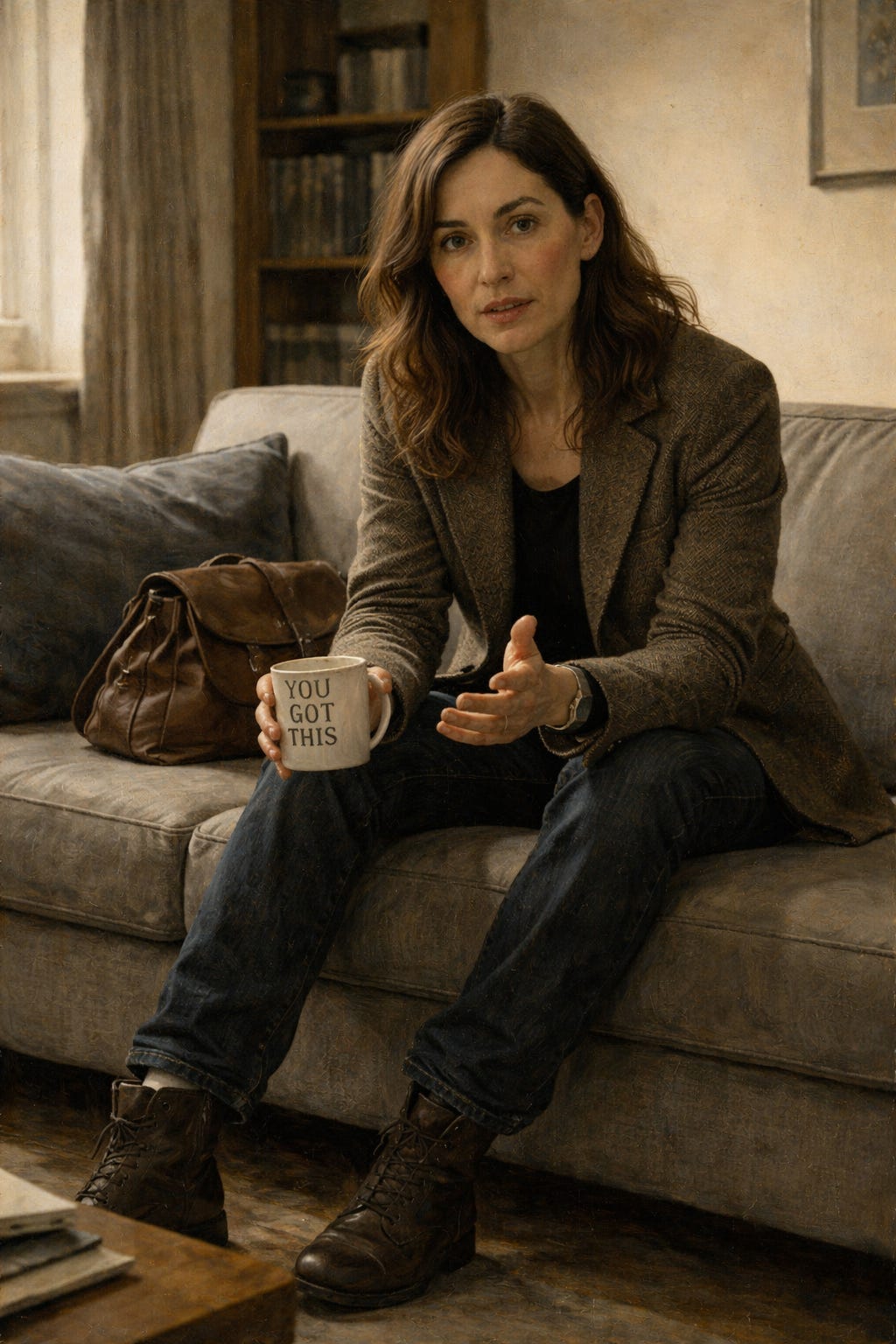
Leo’s sister rang him at 8:12 in the morning, which told him everything he needed to know before he answered.
“Don’t say hello,” Ruth said. “Say ‘yes, Ruth, you were right.’”
Leo closed one eye and rolled onto his back. “Good morning to you too.”
“You missed a doctor’s appointment,” she continued. “Again.”
“I didn’t miss it. I postponed it accidentally.”
“That’s missing it with ambition.”
Leo smiled despite himself. Ruth had always had a gift for diagnosis disguised as insult. “I rescheduled.”
“Of course you did. After the consequences.”
“They were mild consequences.”
“You nearly walked into traffic,” Ruth said.
Leo opened his other eye. “How do you—”
“Mum,” Ruth said. “Also you left a voicemail that sounded like a man discovering mortality mid-sentence.”
“That was a reflective voicemail.”
“That was a voicemail with a pause so long I thought you’d died.”
Leo sat up, rubbing his face. “I’m fine.”
“Mm,” Ruth said. “You’ve always said that right before things got interesting.”
She arrived an hour later, unannounced but inevitable, letting herself into his flat with the spare key she’d never returned and never would.
Ruth took in the space in one long glance: the clean-but-not-deliberate kitchen, the groceries aligned with faintly neurotic care, the absence of chaos where chaos normally bloomed.
“Well,” she said. “This is unsettling.”
“I tidied,” Leo said.
“Yes,” Ruth replied. “That’s the problem.”
Ruth was two years older, sharper at the edges, and carried herself like someone who had learned early that the world would not organise itself around her feelings. She had always been the one who noticed when adults were lying, when plans were optimistic, when optimism itself was being used as a substitute for preparation.
As children, Leo had been the one teachers smiled at. Ruth had been the one they negotiated with.
She dropped onto Leo’s sofa and kicked off her boots. “Sit.”
“I am sitting,” Leo said.
“Sit emotionally,” Ruth said. “You’re hovering.”
He did as instructed.
She studied him, not unkindly, but without mercy. Ruth had never softened the truth for him. She had simply timed it better than most.
“You’re tired,” she said.
Leo nodded. “Yes.”
“Not ill-tired,” Ruth went on. “Not sad-tired. Thinking-tired.”
Leo exhaled. “Is there a medal for that?”
“There’s a phase,” Ruth said. “It passes. Or it becomes your personality.”
She glanced at the kitchen counter. Her eyes snagged on the mug.
YOU GOT THIS.
She snorted. “Christ. Who bought you that?”
“You did,” Leo said.
Ruth closed her eyes briefly. “I should apologise to the universe.”
Leo laughed. “It’s less encouragement now. More… prognosis.”
“That tracks,” Ruth said. “You’ve always responded better to diagnosis than pep talks.”
She leaned back, arms folded. “So. What happened?”
Leo hesitated. He felt the familiar instinct to edit—to present the version of events that would reassure, that would land lightly. Ruth had never been fooled by that version.
“I’m not lucky anymore,” he said.
Ruth blinked. Once. “You were never lucky.”
Leo frowned. “I very much was.”
“You were buffered,” Ruth corrected. “There’s a difference.”
She leaned forward now. “You landed on your feet because there was always something underneath them. That’s not luck. That’s insulation.”
Leo stared at her, the word settling unpleasantly well. “You’ve been thinking about this.”
“I’ve been thinking about you,” Ruth said. “For years.”
He swallowed. “Why didn’t you say anything?”
Ruth shrugged. “You weren’t listening. And honestly? You were happy.”
That landed harder than he expected.
“And now?” Leo asked.
“And now you look like someone who’s realised the floor is solid,” she said. “Which is good. But exhausting.”
Leo laughed softly. “That’s exactly it.”
She studied him again. “Is there a woman?”
Leo didn’t answer immediately. That, in itself, was answer enough.
Ruth smiled slowly. “Ah.”
“It’s not like that,” Leo said.
Ruth raised an eyebrow. “It’s exactly like that.”
“She’s… steady,” Leo said, choosing the word carefully. “And I’m not.”
Ruth nodded. “Good combination. As long as you don’t mistake steadiness for responsibility.”
“I wouldn’t,” Leo said, then paused. “I hope.”
Ruth stood and wandered into the kitchen, opened the fridge, frowned approvingly. “You’ve even started eating like a man who expects tomorrow to arrive.”
“You taught me that,” Leo said.
“I taught you because you never believed me,” Ruth replied.
She poured herself water, leaned against the counter. “Listen. This part?” She gestured vaguely at him. “The tired part. The careful part. The ‘everything costs something’ part?”
“Yes?”
“That’s adulthood,” Ruth said. “You’re late, but you’ve got decent notes.”
Leo smiled. “You make it sound unbearable.”
“It is,” Ruth said. “But it’s honest.”
They sat quietly for a moment.
“You don’t get to opt out now,” Ruth added.
“I’m not planning to.”
“Good. Because if you start wishing things were easy again, I will bully you professionally.”
Leo nodded. “I miss ease. I don’t miss ignorance.”
Ruth smiled, sharp and approving. “Correct answer.”
She left soon after, the flat settling into its old quiet.
Leo washed the mug and put it away.
Diagnosis accepted.
Treatment ongoing.
The bookshelves are full (both fiction and non-fiction) of works covering sibling rivalry, and the importance of emotional regulation in the face of bulldozers, snipers and all the other challenging communication styles. Just ignore it and let them enjoy the power of being CEO of their own living room.